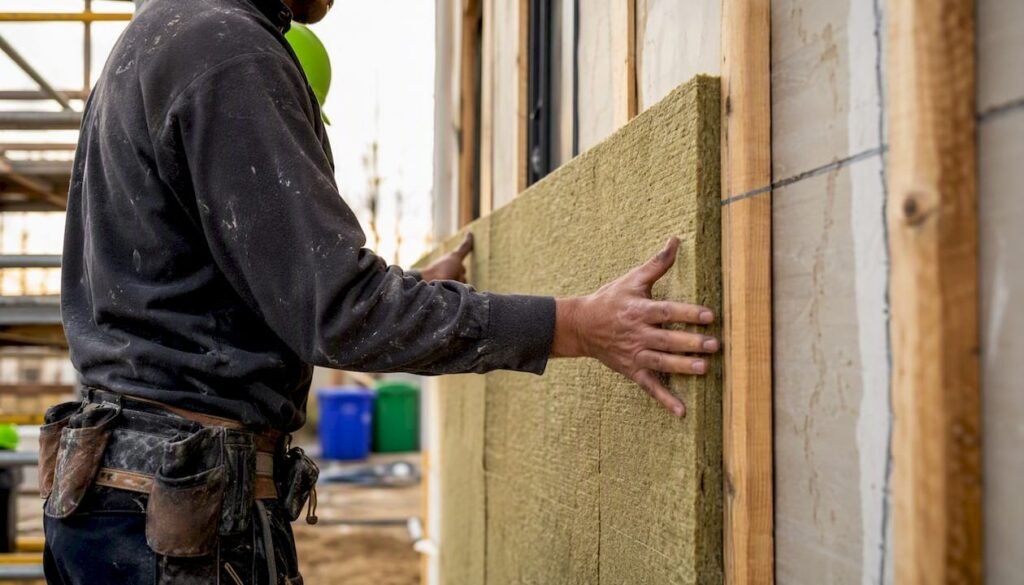
The key rules for sustainability in construction are the Minimum Environmental Criteria (CAM) in their 2025 edition, adopted by DM 24 November 2025 and effective from 2 February 2026; Legislative Decree 36/2023, which makes their application mandatory in public contracts; and the European technical standards UNI EN 15978 and UNI EN 15804 as reference methods for environmental assessment. If you are preparing a tender or project, the first concrete step is to check the tender publication date against 2 February 2026: anything published after that date must already comply with the 2025 CAM.
Immediate checklist to avoid disqualification:
- Regulatory version: check that the tender refers to DM 24.11.2025 and not DM 23 June 2022 (still valid for tenders published before 2 February 2026).
- CAM Report: prepare the document according to the ministerial template attached to DM 24.11.2025, with explicit references to the relevant UNI/EN standards.
- Verifiable EPDs: collect third-party Environmental Product Declarations for relevant construction materials, compliant with UNI EN 15804.
- LCA and LCC: document the life-cycle assessment (UNI EN 15978) and life-cycle cost analysis, with a 100-year time horizon where required by the CAM.
- Justified exemptions: if a criterion does not apply, prepare written technical justification to attach to the tender documentation.
Contents
- What is the national regulatory framework for building sustainability standards?
- Which UNI and European technical standards are actually needed for the CAM?
- How do LCA, LCC, EPDs and the CAM Report work in practice?
- What changes with the 2025 Building CAM and what to do now
- What obligations and risks do the CAM create for contracting authorities?
- LEED, BREEAM, ITACA, CasaClima and EPDs: which scheme should you choose?
- How to prepare a compliant sustainable project: a step-by-step guide
- Key points
- Complying now is a strategic choice, not just an obligation
- Edil-up: document management and CAM compliance in one platform
- Official sources and reference texts: where to find the original documents
What is the national regulatory framework for building sustainability standards?
Italy’s regulatory system governing sustainability in construction is structured across three levels: primary legislation, implementing ministerial decrees, and reference technical standards. Understanding how they connect is the first step in avoiding mistakes in tenders.
The Public Contracts Code and the GPP obligation
D.Lgs. 36/2023 (the new Public Contracts Code) transformed Green Public Procurement from a recommended practice into a legal obligation. Article 57 requires contracting authorities to include minimum environmental criteria in the technical specifications and contract clauses of every procurement procedure falling within the areas covered by the CAM. Established case law confirms that failure to incorporate the CAM may compromise the validity of the tender itself.
CAM ministerial decrees: from the 2022 to the 2025 version
DM 23 June 2022 n.256 served for three years as the reference text for the Building CAM, with an amendment published on 5 August 2024 updating certain provisions. This text remains relevant for tenders published before 2 February 2026 and for reconstructing regulatory developments in litigation.
DM 24 November 2025 adopts the 2025 Building CAM, published in the Gazzetta Ufficiale on 3 December 2025. It enters into force on 2 February 2026, with a two-month transitional period allowing contracting authorities to update their tender templates.
| Document | Reference | Publication in the G.U. | Entry into force | Operational note |
|---|---|---|---|---|
| D.Lgs. 36/2023 | Public Contracts Code | — | — | Makes the CAM mandatory (Article 57) |
| DM 23 June 2022 | 2022 Building CAM | 06/08/2022 | — | Still valid for tenders before 2 February 2026 |
| amendment of 5 August 2024 | Amendment to the 2022 DM | 5 August 2024 | Immediate | Partial update of criteria |
| DM 24 November 2025 | 2025 Building CAM | 3 December 2025 | 2 February 2026 | Replaces the 2022 edition; includes the CAM Report template |
The implementation chain follows a precise structure: the National Action Plan for GPP (PAN GPP) defines priority procurement categories; CAM ministerial decrees establish specific criteria for each category; and contracting authorities incorporate them into tender technical specifications. Skipping any link in this chain exposes the procedure to challenges.
Which UNI and European technical standards are actually needed for the CAM?
The UNI technical standards are cited nearly 200 times in the text of the 2025 Building CAM. They are not optional references: in many cases, they provide the mandatory calculation method for demonstrating compliance with the criteria.
The main standards and their role
UNI EN 15978 defines the calculation method for assessing the environmental performance of buildings throughout their life cycle. It is the reference standard for conducting an LCA at building level: it establishes the information modules (from material production to end of life), the impact categories to be considered, and the rules for interpreting results. In the 2025 CAM, this standard is the prescribed method for the building LCA assessment.
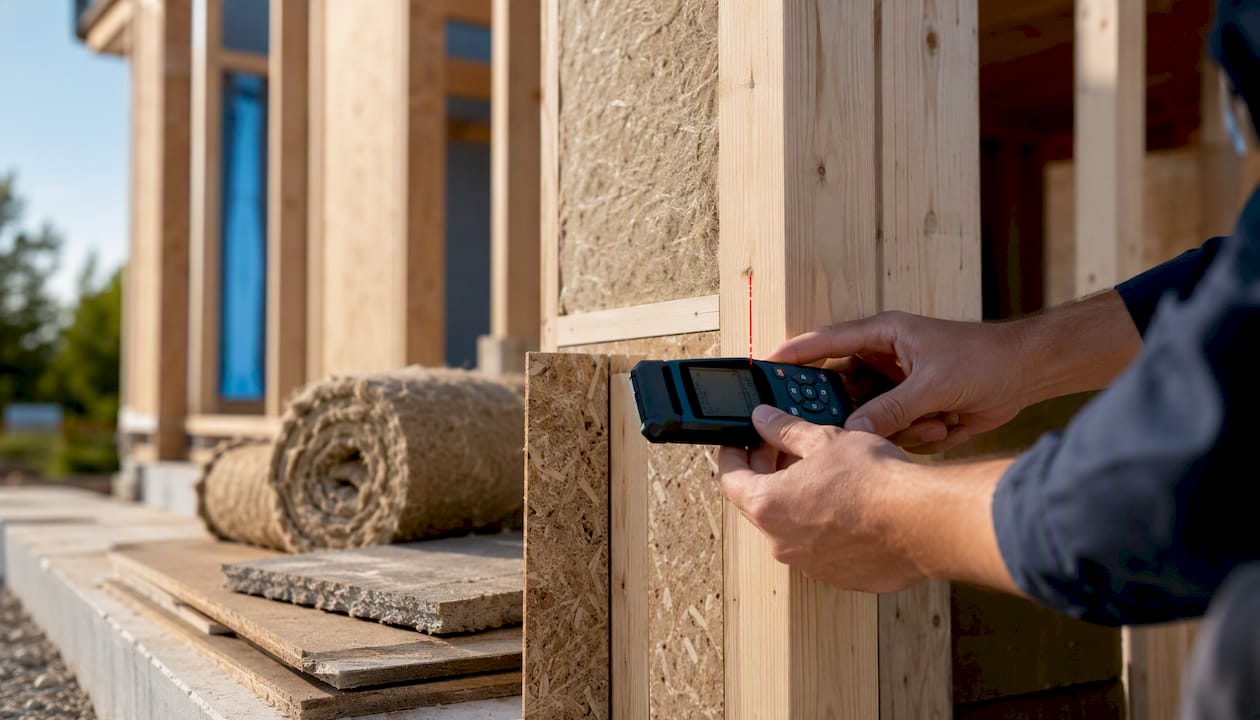
UNI EN 15804 provides the product category rules (PCR) for preparing Environmental Product Declarations (EPDs). Without compliance with this standard, an EPD is not recognized as valid documentation in tenders applying the CAM. The reference version to cite is the one specified in the tender; if no specific version is indicated, use the latest version available when the tender is published.
UNI 11973 addresses the integrated LCA/LCC approach for buildings, providing methodological guidance on life-cycle cost analysis coordinated with environmental assessment. It is particularly relevant to award criteria requiring proof of long-term economic efficiency.
Other standards frequently cited in the CAM include the UNI EN ISO 14001 series (environmental management systems), UNI EN ISO 50001 (energy management), and the UNI EN 13501 series for the fire classification of construction products.
Advice: in the CAM Report and specifications, always cite the standard using its full code and edition year (e.g., “UNI EN 15978:2011”), specifying whether the tender identifies a particular version. If the standard is updated during contract performance, agree the applicable version with the contracting authority before signing.
How do LCA, LCC, EPDs and the CAM Report work in practice?
The 2025 CAM significantly strengthen the role of life-cycle assessment and shift the burden of proof to the designer: it is not enough to declare sustainability; it must be quantified using recognized methods and third-party-verified documentation.
LCA and LCC: what to calculate and over what period
The LCA (life-cycle assessment) applied to a building under UNI EN 15978 covers all modules from material production (A1-A3) through the use stage (B), end of life ©, and benefits beyond the system boundary (D). The 2025 CAM set the time horizon at 100 years for many criteria, requiring documented assumptions about maintenance, component replacement, and end-of-life scenarios.
LCC (life-cycle cost analysis) complements LCA with an economic assessment that considers not only construction costs but also operating, maintenance, and decommissioning costs. For award criteria, the LCA+LCC combination favors bids demonstrating long-term environmental and economic benefits.
EPDs: how they are used and what they must contain
An EPD (Environmental Product Declaration) is a document verified by an independent third-party body that reports a construction product’s environmental data under UNI EN 15804. To be accepted in CAM tenders, it must be:
- verified by an accredited body (not self-declared by the manufacturer);
- valid on the bid submission date (typical validity is 5 years);
- specific to the product actually supplied, not generic to the product category;
- available in a recognized public register (e.g., EPD Italy, IBU, DAPHabitat).
Minimum structure of the CAM Report
The CAM Report is the document that collects and organizes evidence of compliance with the criteria. The template attached to DM 24.11.2025 provides a structure that includes:
- identification of the project and procurement procedure;
- list of applicable CAM criteria and how each is satisfied;
- references to the technical standards used (including code and edition year);
- list of attached documents (EPDs, certifications, technical data sheets, LCA/LCC reports);
- declaration by the responsible designer, with professional signature and stamp.
Advice: assign preparation of the CAM Report to a professional with specific LCA training or to a certified environmental expert. An energy assessor is not automatically competent in LCA: check their CV before delegating.
For more information on construction-site document management and organizing the EPD and certification archive, digital tools can simplify the process.
What changes with the 2025 Building CAM and what to do now
The changes introduced by DM 24.11.2025 are not marginal adjustments. Compared with the 2022 edition, the 2025 CAM redesign the approach to sustainability in construction around three main areas: methodology, documentation, and traceability.
The most significant changes
- LCA and LCC as core requirements — life-cycle assessment moves from an award criterion to a basic requirement in many areas, with mandatory methodology under UNI EN 15978.
Timeline and transitional rules
Tenders published up to 1 February 2026 still apply DM 23 June 2022 (with the amendment of 5 August 2024). From 2 February 2026 onward, every new procedure must comply with the 2025 CAM. There are no automatic extensions: the date is binding.
The programmatic decree of 13 February 2026 does not amend the CAM currently in force but identifies the areas to be reviewed during 2026, indicating the technical directions in which the system will develop. Monitoring this document is useful for anticipating future updates.
Immediate updates to project templates
- Update special tender specifications with references to DM 24.11.2025.
- Replace contract clauses referring to the 2022 DM with the updated clauses.
- Include the new award criteria provided by the 2025 CAM.
- Verify that regular suppliers have current and valid EPDs.
Advice: structure the project team with at least one LCA expert, including an external expert, and a lawyer specializing in public procurement. The documentary complexity of the 2025 CAM requires skills that rarely coexist in one professional.
For a complete operational guide, see the section dedicated to Building CAM, with designers’ responsibilities and operational compliance guidance.
What obligations and risks do the CAM create for contracting authorities?
Article 57 of D.Lgs. 36/2023 leaves no discretion: contracting authorities publishing tenders in areas covered by the CAM must include the minimum environmental criteria in the technical specifications and contract clauses. This is not a recommendation.
Risks for economic operators
Operators submitting bids that do not comply with the CAM risk exclusion from the procedure. The most frequent cases concern:
- EPDs not verified by a third party or expired on the bid submission date;
- missing CAM Report or a report that does not comply with the ministerial template;
- references to superseded regulatory versions (e.g., citing the 2022 DM in a tender applying the 2025 CAM);
- percentages of recycled material not documented with verifiable evidence.
Checks before submitting a bid
- Check that the tender explicitly cites DM 24.11.2025 or DM 23 June 2022 and verify consistency with the publication date.
- Verify the validity of all attached EPDs (expiry date, verification body, public register).
- Check that conformity attestations are issued by bodies accredited under the relevant standard.
- Verify consistency between the values declared in the CAM Report and the data reported in the EPDs and LCA reports.
For more information on best practices in public construction procurement, including pre-bid documentary checks, dedicated operational resources are available for the sector.
LEED, BREEAM, ITACA, CasaClima and EPDs: which scheme should you choose?
Voluntary certifications and assessment protocols do not replace the CAM, but they may be recognized as award criteria in public tenders and provide a competitive advantage in bids. The choice depends on the project area, target market, and the operator’s positioning strategy.
-
LEED (Leadership in Energy and Environmental Design): an American protocol managed by USGBC, used internationally and also in Italy for commercial and office buildings. It measures energy efficiency, indoor air quality, water use, materials, and innovation. Recognized in tenders as an award criterion, but certification is lengthy and costly (typically 12–24 months, with costs varying according to building size).
-
BREEAM (Building Research Establishment Environmental Assessment Method): a British protocol, among the most widely used in Europe for commercial and residential buildings. It assesses categories similar to LEED using a flexible scoring system. It is less established in Italy than LEED but is growing, especially among institutional investors.
-
ITACA: an Italian protocol developed by the Institute for Innovation and Transparency of Public Procurement and Environmental Compatibility. It is the most closely aligned with the national regulatory context and is expressly cited in some Italian public tenders as an award criterion. Its modular structure makes it adaptable to residential, school, and commercial buildings.
-
CasaClima: certification developed by the CasaClima Agency of Bolzano, focused primarily on energy performance and occupant comfort. It is widespread in northeastern Italy and in high-quality residential construction. Recognized in some regional tenders as an award criterion.
-
EPD: not a building certification but a construction-product certification. It is the document that feeds the building LCA and CAM compliance. Without EPDs for the main materials, a credible LCA cannot be conducted.
| Scheme | Main scope | Mandatory/Voluntary | Recognition in the CAM | Complexity |
|---|---|---|---|---|
| LEED | Commercial/residential buildings | Voluntary | Award criterion | High |
| BREEAM | Commercial/residential buildings | Voluntary | Award criterion | High |
| ITACA | All buildings (residential, educational, commercial) | Voluntary (mandatory in some regions) | Expressly cited | Medium |
| CasaClima | Residential, primarily northern Italy | Voluntary | Award criterion in regional tenders | Medium |
| EPD (product) | Construction products | Mandatory under the CAM for some materials | Basic requirement | Low–Medium |
How to prepare a compliant sustainable project: a step-by-step guide
Following a precise sequence reduces the risk of forgetting critical documents and makes it possible to spread the work over time rather than concentrating everything in the final weeks before the deadline.
-
Tender analysis: identify the applicable CAM version (DM 24.11.2025 or DM 23 June 2022), the mandatory and award criteria, and the documents required for each.
-
Defining the LCA scope: establish which building components fall within the assessment, which information modules to include (A1-A3, B, C, D), and the time horizon (100 years where required).
-
Collecting EPDs: contact suppliers of structural materials, insulation, windows, and finishes to verify the availability of valid EPDs compliant with UNI EN 15804. This phase typically takes 4–8 weeks if suppliers need to produce new EPDs.
-
Conducting the LCA and LCC: assign the assessment to a qualified LCA expert using recognized software (e.g., SimaPro, OpenLCA, One Click LCA). The LCA report must be verifiable and consistent with the EPD data collected.
-
Preparing the CAM Report: complete the ministerial template attached to DM 24.11.2025, attaching all supporting documents organized by criterion.
-
Cross-checking: check consistency between the values declared in the CAM Report, the EPD data, and the LCA report results. Even minor inconsistencies can generate requests for clarification or exclusion.
-
Post-work checks: include in the contract the procedures for checks during construction, including supply traceability and documentation of materials actually installed, as well as procedures for any substitutions.
Key questions to ask suppliers before including them in the bid:
- Do you have a third-party-verified EPD for this product, valid on the delivery date?
- What is the certified percentage of recycled content, and what documentation supports it?
- Can you provide traceability for the supply chain?
In terms of costs, conducting a complete LCA for a medium-sized building requires an investment that varies according to project complexity and EPD data availability. Including this item in the financial offer as a separate, documented cost is the most transparent strategy toward the contracting authority.
Monitoring construction progress during the execution phase is equally important: CAM compliance is not checked only on paper but must be maintained throughout contract performance.

Key points
The 2025 Building CAM (DM 24.11.2025, effective from 2 February 2026) make life-cycle assessment with third-party-verifiable EPDs and a CAM Report structured according to the ministerial template mandatory: those who do not immediately update their tender templates and specifications risk exclusion or cancellation of the procedure.
| Point | Details |
|---|---|
| 2025 CAM mandatory from 2 February 2026 | Every tender published after this date must apply DM 24.11.2025; the 2022 DM remains valid only for earlier procedures. |
| LCA and LCC as basic requirements | Life-cycle assessment (UNI EN 15978) and cost analysis (UNI 11973) are no longer merely award criteria but core requirements under the 2025 CAM. |
| Third-party-verified EPDs | Manufacturer self-declarations are not accepted; every EPD must comply with UNI EN 15804 and be verified by an accredited body. |
| Risk of exclusion for incomplete documentation | Missing CAM Reports, expired EPDs, or outdated regulatory versions are the most frequent causes of exclusion in public tenders. |
| Edil-up for document management | Edil-up supports centralized collection of EPDs, attestations, and CAM checklists, reducing the risk of documentation gaps in bids. |
Complying now is a strategic choice, not just an obligation
There is a widespread tendency among industry professionals to treat the CAM as a bureaucratic requirement to be handled at the last minute, collecting the necessary documentation only once the tender has been published. This approach worked when the criteria were simple and the required documentation was limited. With the 2025 CAM, it no longer works.
The reason is structural: life-cycle assessment requires data that suppliers often do not have ready. A third-party-verified EPD can take weeks, sometimes months, to produce. If this documentation is collected only after reading the tender, there is a risk of submitting an incomplete bid or having to abandon familiar materials because the supplier has not yet updated the EPD.
The most effective approach observed among better-prepared professionals is different: build an advance archive of valid EPDs for routinely used materials, update standard specifications with the 2025 CAM clauses before the next tender arrives, and train the internal team on LCA requirements before they become urgent. A documentary check conducted weeks before the deadline has already enabled several operators to avoid exclusion by discovering in time that some EPDs had expired or that suppliers had changed products without updating the documentation.
There is also a competitive aspect that is often underestimated. The award criteria in the 2025 CAM reward those who demonstrate environmental performance above the required minimum. A bid with a detailed LCA, high-quality EPDs, and a well-structured CAM Report does more than pass the eligibility threshold: it earns points in the award process. Preparing early turns a regulatory obligation into a tangible advantage in tenders.
Edil-up: document management and CAM compliance in one platform
Anyone working on several construction sites at once knows how difficult it is to track EPDs, attestations, updated versions of standards, and document deadlines. Edil-up is the digital platform that solves this problem in practical terms: centralized storage of EPDs and certifications, CAM checklists integrated into every project phase, supplier and material traceability, templates for the CAM Report, and tools for monitoring compliance during construction supervision.
The platform is useful from the tender stage through final handover: it enables the project team to work in a coordinated way, LCA consultants to upload reports directly to the system, and the construction manager to verify in real time that installed materials correspond to those documented in the bid. For those wishing to understand how construction-sector digitalisation can reduce non-compliance risks, Edil-up offers a practical, immediate starting point.
Edil-up supports the documentation process but does not replace the required technical roles: the responsible designer, LCA expert, and certifier remain essential. The platform helps them work better; it does not replace them. To review available plans and get started, the pricing page provides all the necessary information.
Official sources and reference texts: where to find the original documents
Having the right links to official texts saves time and reduces the risk of citing outdated versions. Below are the main sources and guidance on what to look for in each.
-
DM 24.11.2025 (2025 Building CAM): available on the MASE portal in the current CAM section. It contains the complete criteria, the CAM Report template, and explanatory notes. Cite it in tenders as “DM 24 November 2025, published in G.U. no. [number] on 3 December 2025”.
-
DM 23 June 2022 and amendment of 5/08/2024: the consolidated text is useful for tenders during the transitional phase and for historical reconstruction in litigation.
-
UNI standards — the UNI catalogue (uni.com) allows users to purchase official versions of the standards. To cite them correctly, always indicate the code, title, and edition year. UNI EN 15978 and UNI EN 15804 are also available in English; Italian documents cite the UNI version.
-
Regulation (EU) 305/2011 (CPR): the Construction Products Regulation is available on EUR-Lex in Italian. It is relevant to CE marking of products and declarations of performance that feed into EPDs.
-
Directive 2018/844 (EPBD): the directive on the energy performance of buildings and its amendments define European objectives for renovations and minimum energy performance, complementing the context of the national CAM.
-
Programmatic decree of 13 February 2026: available on LavoriPubblici with technical commentary. Useful for monitoring CAM updates planned for 2026.
| Source | What to look for | How to cite |
|---|---|---|
| MASE (mase.gov.it) | Current CAM, CAM Report template, interpretive circulars | “DM [date], published in G.U. [number] on [date]” |
| Normattiva / G.U. | D.Lgs. 36/2023, consolidated text with amendments | “D.Lgs. 36/2023, Article 57” |
| UNI (uni.com) | UNI EN 15978, UNI EN 15804, UNI 11973 technical standards | “UNI EN 15978:2011” (code + edition year) |
| EUR-Lex | CPR, EPBD, EU Taxonomy | “Regulation (EU) 305/2011” or “Directive 2018/844/EU” |
Advice: organize a shared document folder with the project team containing the official texts of the applicable CAM, the relevant UNI standards (or purchase links), EPDs for selected materials with expiry dates, and the CAM Report template pre-filled with project data. Updating this folder for every new tender drastically reduces document preparation time.