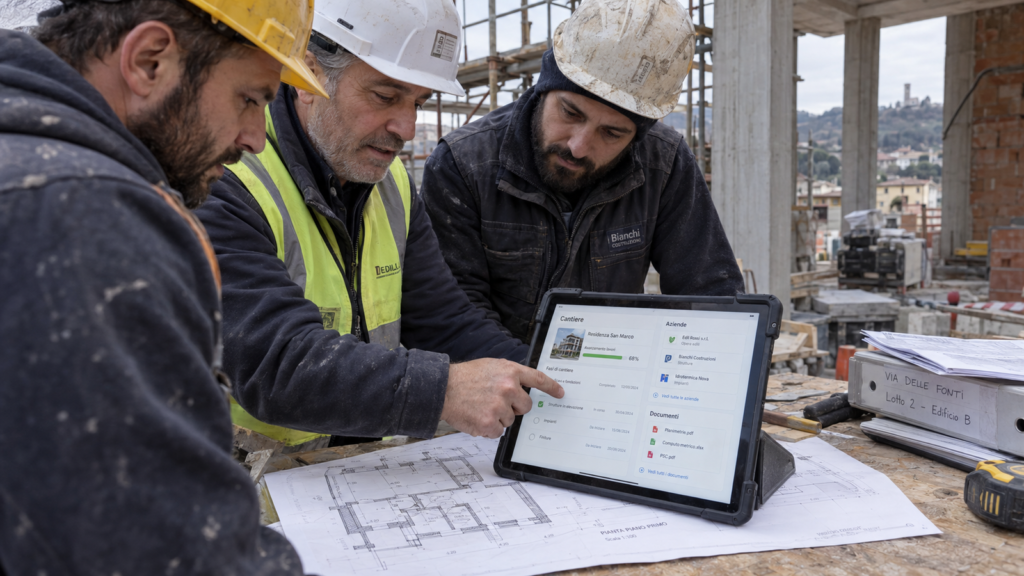
Collaboration between construction companies can open up new work opportunities by connecting complementary skills with clear organisation. Finding an available building-services contractor, coordinating a specialised team or taking on a more complex project becomes easier when you know whom to involve, what information to share and how to verify the work.
The starting point is practical: build a partner network before an urgent need arises and establish a method for working together. Here are seven strategies for turning contacts between companies into useful collaborations, from the first listing through site management.
Why invest in collaboration between construction companies
A company may have experience and customers, but not every specialism or the availability needed for every project. A network of collaborators makes it possible to assess work requiring additional capabilities and present the client with a more complete organisation.
The potential benefits concern three areas:
- New projects: assess opportunities requiring work complementary to your own.
- Operational continuity: have contacts you already know when the schedule changes or a specialist is needed.
- Long-term relationships: work again with partners who know your working method and the required standards.
These benefits depend on partner selection and coordination. Adding companies to a construction site without clarifying timings, assignments and costs can instead increase difficulties.
7 winning strategies for working with other construction companies
1. Make it clear what your company offers
A useful company profile answers the questions asked by anyone choosing a collaborator: what work do you carry out, which areas do you cover and what experience can you document? Generic descriptions such as “all types of construction work” do little to show where you can add value.
Include specialisms, service area, photos of work actually completed and an accessible contact person. Keep information about availability and relevant qualifications up to date. Publish references and images only when you are legally entitled to share them.
2. Look for complementary partners before you need them
Identify the work for which you most often rely on external companies: building services, scaffolding, waterproofing, finishes or other specialist activities. For each area, build a shortlist of contacts and check their operating area, experience and organisational capacity.
Word of mouth remains useful; a network for construction companies can complement it and make it easier to identify new businesses. An online profile is the first point of contact: before assigning work, investigate references and suitability for the assignment.
3. Publish listings that invite relevant responses
To find construction partners, describe a specific need. An effective listing should state:
- type of work and approximate size of the project;
- site location and expected period;
- required skills and experience;
- relevant operating conditions and whether a site visit is required;
- information to submit and the contact person’s details.
Illustrative example: “We are looking for a company specialising in waterproofing for a roof of approximately 250 m² in the province of Teramo. Work is expected to start in November, subject to confirmation after a site visit. Please send a company presentation, similar projects and availability.”
A detailed request helps you compare more relevant responses and clarify straight away which points still need to be defined.
4. Agree on activities, costs and responsibilities
Before work begins, make the scope, exclusions, deadlines and delivery-check criteria explicit. Also clarify who supplies the materials, how variations are approved and what the payment terms are.
Identify one contact person for each company and agree on how to handle unexpected issues. A problem reported promptly is easier to address than a change communicated when the next team has already arrived.
If the relationship develops into an established project between companies, you can learn more about the network contract on the Registro Imprese website. This is a specific legal form of collaboration: joining a digital network is not equivalent to entering into a network contract.
5. Organise documents and updates in one shared place
When drawings, photographs and decisions are spread across personal chats, emails and different folders, reconstructing the latest version takes time. Choose a reference environment for project documentation and establish who can view or update the information.
Use recognisable file names and consistent dates and versions. For each change, indicate what has changed and which activities are involved. Sharing must respect roles: every collaborator should be able to access the information needed for their assignment.
Organising documents also supports coordination, but it does not automatically certify site compliance. For more information on prevention, consult the INAIL resources on construction-site safety.
6. Link every task to a person responsible and a deadline
A shared schedule must make dependencies between companies visible. If building-services installation comes before closing the walls, the team carrying out the next stage must know when it can start and which checks remain outstanding.
For each task, record the contact person, planned date, status and obstacles. Agree on an update frequency proportionate to the work and a quick way to report blockages. Photos and notes help describe progress, together with the checks planned for the work.
7. Measure results before expanding the collaboration
At the end of the first project, review it with the partner: what worked and what needs to change? Start with a few observable indicators, without attributing improvements to software that you have not measured.
- Search: days between publishing the request and selecting the partner.
- Timeliness: tasks completed by the agreed deadline divided by total completed tasks.
- Rework: corrective work required and its causes.
- Coordination: hours spent recovering information or resolving misalignment.
- Commercial continuity: collaborations that continue with new assignments.
Compare projects of similar complexity and size. Before repeating the agreement, also consider coordination costs and the actual margin: more work does not automatically mean greater profitability.
Practical example: three companies on the same renovation
This scenario is illustrative and does not represent a documented client case.
A construction company needs to organise a renovation involving structural work, building services and finishes. It needs two partners and publishes separate requests, specifying the work, area and period. After the site visits, it agrees assignments and a schedule with the selected companies.
In the shared schedule, each company finds its own stage and contact person. The building-services contractor flags additional work before the walls are closed; the manager updates the sequence and informs whoever will work next.
The value of the method lies in being able to make decisions based on accessible information. At the end of the project, the companies assess deadlines, problems and costs: these are the data that show whether the collaboration deserves to continue.
How Edil-Up supports the network and site management
Edil-Up connects contact between companies with work organisation. The features presented for businesses include listings, connections with other companies in the sector, company documents and communication with the team.
For anyone looking for an app for construction companies, the process can start with an up-to-date profile and a specific collaboration request. Once a partner has been identified, organising site information helps maintain continuity in the relationship.
Technology supports the method: selection, agreements and quality of work remain decisive. Start with a real need, involve the relevant contacts and check which functions suit your company.
Want to build new collaborations in the construction sector?
Find out how to present your company, publish listings and connect with other businesses on Edil-Up.
Discover Edil-Up for businessesFrequently asked questions about collaboration between construction companies
How can I find construction companies to work with?
Combine professional contacts, trade associations and digital networks. Describe the required work and assess experience, availability and references before choosing a partner.
How do I choose a reliable partner?
Review similar projects, organisation and ability to follow the schedule. Check the requirements relevant to the assignment and clarify activities, costs and monitoring arrangements before work begins.
Can an app help me find new construction work?
An app with company profiles and listings can make a business more visible and facilitate new contacts. Winning a project then depends on the relevance of the offer, availability and the agreement between the parties.
How can misunderstandings between companies on a construction site be avoided?
Assign a contact person to each company, share the schedule and keep updated documents accessible. Record decisions about changes and promptly communicate obstacles to the other companies involved.
Edil-Up Team
Find new opportunities for your company.
Sign up for Edil-Up and connect with other businesses in the construction sector.