
The direct answer: to manage and share construction-site documents in compliance with D.Lgs. 81/08, you need a centralised platform with role-based access control, automatic versioning and an audit trail. Shared folders in email or generic drives are not enough: without naming rules and an integrated expiry calendar, the risk of working from obsolete versions is real and can be documented by the supervisory authorities.
Five actions to start immediately:
- Centralise all documents in a single shared platform or repository, eliminating local archives and email chains
- Define naming conventions before uploading the first file (site code, date, document type, version)
- Enable automatic versioning so that every change creates a new revision without overwriting the previous one
- Set up the expiry calendar with notifications for DURC, training certificates, medical fitness certificates and machinery certificates
- Train personnel with a practical session of at least two hours before go-live
The people responsible for the launch are the Coordinator for Safety during Execution (CSE), the Works Director and the main contracting company. Each has a precise remit covering what to upload, who may edit and who approves.
Key points
Compliant construction-site document management under D.Lgs. 81/08 requires a centralised platform, automatic versioning, an active expiry calendar and role-based responsibilities defined from the first day.
| Point | Details |
|---|---|
| Centralise immediately | Eliminate archives held in email and personal drives: a single repository with access control is the first mandatory step. |
| Naming and versioning from day one | Without shared conventions, even the best platform becomes a disorganised archive within a few weeks. |
| Active expiry calendar | DURC, certificates and medical fitness certificates have precise expiry dates: automatic notifications prevent expired documents during inspections. |
| Documented roles and responsibilities | CSE, DL and the contracting company have distinct remits: the audit trail certifies who uploaded and approved each document. |
| Edil-up as an operating environment | Edil-up centralises documentation, expiry tracking and communication between companies, reducing delivery times by up to 20%. |
Contents
- Which documents must always be kept on site and how to present them
- Why digitise construction-site document sharing
- Key features a construction-site document-sharing platform must have
- How to organise files and versions: folder structure, naming and revision control
- Who maintains and shares documents: roles and obligations on site
- Regulations and practical references in Italy: what to check to remain compliant
- A quick plan for introducing document sharing on site
- Common mistakes to avoid when sharing construction-site documents
- Edil-up in practice: operational savings and sustainability
- Edil-up’s perspective: practicality and compliance as priorities
- Edil-up for construction-site document sharing
- Sources
Which documents must always be kept on site and how to present them
The mandatory documentation includes both safety plans and companies’ administrative and technical documents. Keeping them in digital format is not merely a convenience: the supervisory authorities require them to be available for consultation and verification on site.
| Document | Responsible party | Update frequency |
|---|---|---|
| PSC (Safety and Coordination Plan) | CSE | For each significant design change |
| POS (Operational Safety Plan) | Executing company | For each new work phase |
| PiMUS (Scaffold Assembly, Use and Dismantling Plan) | Scaffolding supervisor / CSE | For each change to the scaffolding |
| DVR (Risk Assessment Document) | Company employer | Annual review or upon change |
| DURC (Single Certificate of Contribution Compliance) | Company / Client | Regularly |
| Site register | Works Director | Continuous updating |
| Training certificates | RSPP / Company | When the course expires |
| Workers’ medical fitness certificates | Occupational physician / Company | When the medical examination expires |
| Machinery certificates and logbooks | Company / Supervisor | For each new machine or renewal |
| Site inspection reports | CSE / DL | After each inspection |
| Declarations of conformity for systems | Installer | Upon testing |
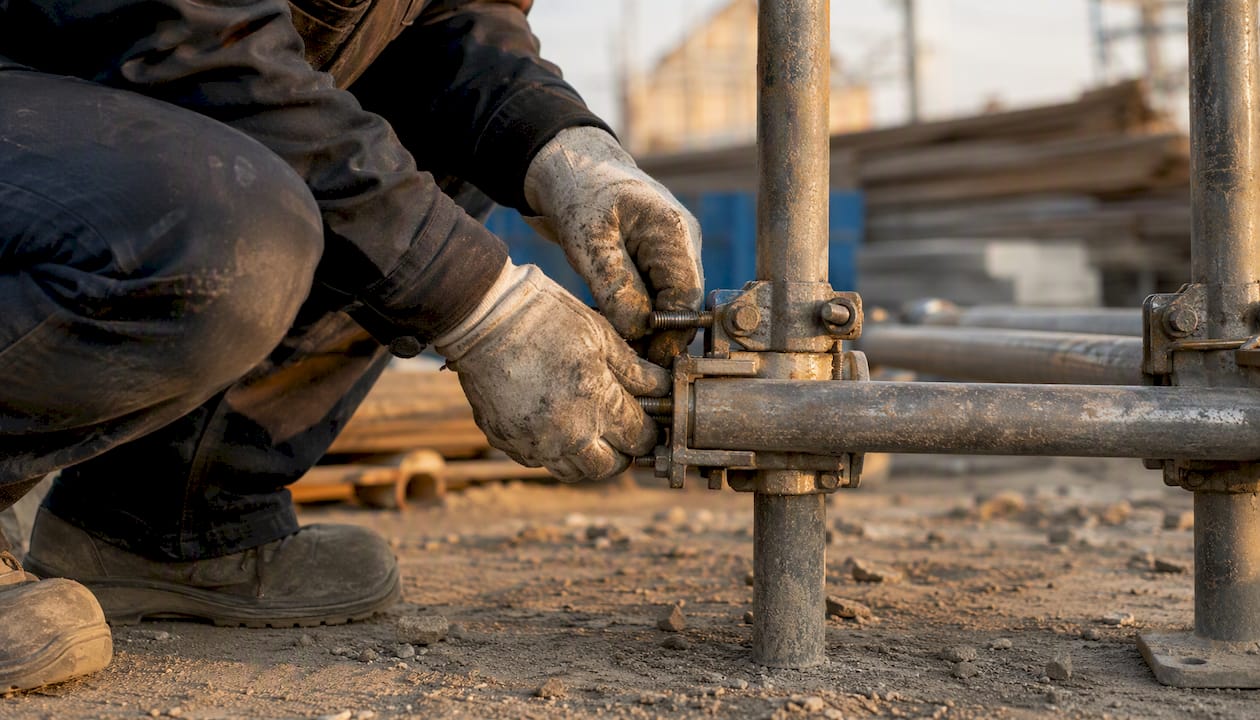
PiMUS deserves particular attention: according to CNI circular CIRC-CNI-209, it must be prepared before scaffold installation, kept on site for the entire duration of the operations and updated whenever structural or usage changes occur.
Tip: Save all documents in PDF/A format with completed metadata (author, date, version, site code). This format ensures long-term readability and compatibility with substitute digital preservation systems. For documents to be shown during inspections, also prepare a version optimised for printing from a mobile device.
Why digitise construction-site document sharing
The most immediate advantage is access: a document correctly uploaded to a centralised platform is available within seconds to anyone with permission, from any device. No more phone calls to find out where the current POS is or which PSC version is operational.
The concrete benefits go beyond convenience:
- Fewer errors caused by obsolete versions: without versioning, two operators can unknowingly work on different revisions of the same document. As highlighted by Edilnet’s industry analysis, outdated drawings and duplicate files are among the most frequent causes of discrepancies between design and site
- Traceability for inspections: the audit trail records who uploaded, modified or approved each document and when. During an inspection, this history is as valuable as the document itself
- Automatic expiry monitoring: DURC, certificates and medical fitness certificates have precise expiry dates; a digital expiry calendar eliminates the risk of working with expired documents
- Control-ready preservation: approximate document management exposes clients and companies to concrete risks of sanctions; structured digitisation measurably reduces this risk
- Secure sharing between multiple companies: subcontractors and suppliers receive access only to documents within their remit, with granular permissions and without exposing the entire archive
Operational data: Edil-up indicates a reduction of up to 20% in delivery times for sites adopting centralised document and project management through a platform.
Key features a construction-site document-sharing platform must have
Not all document-management software is suitable for construction sites. A generic drive lacks an expiry calendar, while business management software may lack offline mobile access. Features to check before choosing any solution:
Essential features:
- Role-based access control: the CSE, DL, company, subcontractor and inspector should see only what concerns them
- Automatic versioning: each upload creates a new revision with a timestamp; the operational version is clearly marked
- Immutable audit trail: logs of all actions (upload, modification, approval, download) with date, time and user
- Digital signature and substitute digital preservation: for documents requiring legal validity without printing
- Offline synchronisation and mobile access: essential on sites with limited connectivity; documents must remain available without a network connection
- Automatic expiry calendar with notifications: configurable alerts for DURC, certificates, medical examinations and machinery certificates
- Checklists and pre-filled templates: speed up document collection at the start of each site
Useful advanced features:
- QR codes linked to site folders for quick mobile access during inspections
- Integration with BIM software and project-management tools to link technical documents to work progress
- APIs for synchronisation with business management systems (accounting, HR, ERP)
- Preconfigured POS, report and checklist templates based on Italian regulations
Tip: Start with versioning and the expiry calendar. These are the two functions that prevent the costliest errors (working from incorrect revisions and expired documents). Advanced BIM or ERP integrations can come later, once the basic workflow is established.
How to organise files and versions: folder structure, naming and revision control
A shared folder structure and clear naming convention are as important as the platform itself. Without these rules, even the best software becomes a disorganised archive.
Recommended folder structure:
[CodCantiere]_[NomeCantiere]/
├── 01_Amministrazione/        (contracts, DURC, authorisations)
├── 02_Progetto/               (technical documents, variations)
├── 03_Sicurezza/              (PSC, POS, PiMUS, DVR)
├── 04_Verifiche/              (site inspection reports, inspections)
└── 05_Report/                 (progress reports, photographs, communications)
Standard naming convention:
[DataISO]_[CodCantiere]_[TipoDoc]_[Autore]_v[##]
Example: 20260315_CT042_POS_RossiSrl_v03.pdf
Required fields are: date in ISO format (YYYYMMDD), site code, document type, author or company, and a two-digit version number. Adding metadata to the PDF file (title, author, keywords) makes documents searchable without opening them.
Revision-control procedures:
- Only the CSE or DL may mark a version as “operational”
- Previous versions remain in the history but are visible only to users with advanced permissions
- Each new version requires a brief change note (what changed, why and who approved it)
- Never overwrite a file: always upload it as a new version with an incremental number
As industry professionals point out, the fatal error is failing to establish these rules from day one: informal practices work only on very simple, short-duration sites.
Tip: Prepare a one-page document with the naming and versioning rules and distribute it to all companies before work starts. Attach it to the subcontract as an operational requirement as well.
Who maintains and shares documents: roles and obligations on site
Document responsibility is never generic: each document has a specific owner, and confusing them creates gaps that always emerge during inspections.
Distribution of key responsibilities:
- Client: verifies that the PSC and project file are prepared before work starts; retains contractual documents and administrative authorisations
- CSE (Coordinator for Safety during Execution): manages and updates the PSC, collects companies’ POS documents, checks the completeness of the site file and ensures that it can be consulted. The CNI circular stresses that the file must be organised so it can be supplemented and consulted at any time
- Works Director: maintains the site register, verifies that technical documents conform to approved variations and signs site inspection reports
- Main contracting company: prepares and updates the POS, collects DURC, training certificates and medical fitness certificates for its own workers and those of subcontractors
- RSPP (Head of the Prevention and Protection Service): updates the DVR, verifies the validity of training certificates and coordinates health-surveillance documentation
- Supervisors and site managers: verify that incoming workers have the required documents and report imminent expiries to the person responsible
Site admission procedure:
Before a new company or self-employed worker enters the site, verify: an updated and signed POS, valid DURC, training certificates relevant to the planned work and valid medical fitness certification. Access is authorised only after the documentary check is complete. This procedure must be tracked on the platform with the date, outcome and person responsible for the check.
For structured construction-site document management, assigning platform access by role keeps legal responsibilities clear: whoever uploaded a document is its registered owner, and the audit trail certifies this.
Regulations and practical references in Italy: what to check to remain compliant
The Italian regulatory framework for construction-site documentation is defined mainly by D.Lgs. 81/08 and its annexes. Article 53 and Annexes XV, XVI and XVII establish minimum contents, retention methods and delivery obligations for PSC, POS, the project file and the site register.
Main references:
- D.Lgs. 81/08 and updates: the updated text published by the Labour Inspectorate recalls the obligations to prepare and retain documentation according to criteria verifiable by supervisory authorities
- CNI circular CIRC-CNI-209: provides operational guidance on the CSE’s role and the organisation of the site file
- UNI/PdR 168:2024: reference guidelines for document management in construction processes, applicable where required by the client or contract
- INAIL guidelines: practical guidance on DVR, health surveillance and training, with references to formats accepted for digital preservation
What supervisory authorities require:
Inspectors check not only that documents are present but also their substance: a generic POS not completed for the site’s specific work does not meet the requirements, even if it is physically present. Documents must be:
- Updated for the current work phase
- Accessible on site (including digitally on a mobile device or in print)
- Signed by the responsible parties with a legible date
- Consistent with one another (the POS must refer to the PSC; the DVR must cover the actual risks)
For digital preservation with legal value, documents must meet the requirements of the Digital Administration Code (CAD): a non-editable format, a qualified or advanced digital signature where required, and a preservation system guaranteeing integrity and readability over time.
A quick plan for introducing document sharing on site
Moving from analogue practices to a verifiable digital workflow takes four weeks when handled methodically. Here is the operational roadmap.
Week 1: mapping and preparation
- Inventory all active documents for each site (who has them, in what format and where they are saved)
- Identify the people responsible for each document category
- Choose the platform and configure the folder structure
- Define and communicate naming conventions to all companies involved
Week 2: configuration and uploading
- Create user accounts with the correct role-based permissions
- Upload existing documents into the defined structure, applying naming rules immediately
- Set up the expiry calendar with expiry dates for DURC, certificates and medical fitness certificates
- Configure automatic notifications (at least 30 days before expiry)
Week 3: testing and verification
- Simulate an inspection: verify that all mandatory documents can be found in under two minutes
- Test offline mobile access on at least two different devices
- Verify that mobile printing produces readable and complete documents
- Correct any permission gaps or missing documents
Week 4: training and go-live
- Practical training session (minimum two hours) for the CSE, DL, site managers and company representatives
- Distribute the quick naming and versioning guide in printed and digital formats
- Activate the system as the sole official archive, informing everyone that versions in email or personal drives are no longer valid
- Schedule a post-go-live review after 30 days
Operational activation checklist:
- Accounts created and permissions verified for all users
- Folder structure configured according to the shared scheme
- POS, report and checklist templates uploaded as templates
- Expiry calendar active with notifications configured
- Offline test passed on at least two devices
- Active backup plan (minimum frequency: daily)
- Documented and tested disaster-recovery procedure
The industry’s operational guides recommend establishing a workflow from the outset with centralised collection, compliance checks on receipt and expiry notifications: this structure reduces the risk of penalties and simplifies inspections.
Common mistakes to avoid when sharing construction-site documents
The most costly mistakes are not technical but organisational: informal practices that seem to work until an inspection or dispute occurs.
Common mistakes and how to identify them:
- Email as the primary archive: if site documents live in inboxes, there is no versioning, access control or audit trail. The warning sign is when someone replies, “I emailed it to you,” to a document request. Solution: prohibit contractually the use of email as an archive and designate the platform as the sole official repository
- Lack of versioning: files named “POS_final”, “POS_final2” or “POS_DEFINITIVO_usare_questo” are proof of a system without revision control. Every version must have an incremental number and a change note
- Overly broad permissions: giving everyone full access for simplicity exposes confidential documents (DVR, health data) to people who should not see them and makes it impossible to assign responsibility for unauthorised changes
- Expired documents not removed: an expired DURC still visible in the active folder is a risk during inspections. The expiry calendar should automatically move expired documents to an archive folder, not delete them
- No backup procedure: losing a site’s document archive owing to a failure or human error can have serious legal consequences. Backups must be automatic, daily and stored on a system separate from the main platform
- Insufficient training: the best platform is useless if site managers continue using WhatsApp to exchange documents. Training is not optional
Tip: The most common problem is not technology but habit. WhatsApp and email seem faster because they are familiar. The solution is not to ban them for communication, but to make the document platform just as immediate: QR codes on the site noticeboard that open the correct folder directly, and push notifications for expiries.
Edil-up in practice: operational savings and sustainability
A site moving from a mixed archive (email, personal drives, physical folders) to a centralised platform typically follows the same sequence: in the first week, the true quantity of scattered documents emerges; in the second, the structure is consolidated; from the third week onwards, the time devoted to searching for and checking documents falls sharply.
Edil-up is designed for this journey. The platform centralises project management and documentation in one environment, with role-based access control, an integrated expiry calendar and tools for direct communication between companies. Sites adopting centralised management on Edil-up report a significant reduction in delivery times, thanks to the elimination of delays linked to document searches and manual expiry checks.
Digital document management is not just an operational advantage: every project managed on Edil-up contributes to calculating the environmental savings generated, with one tree planted for every active subscription.
The integration of document management, work-progress monitoring and networking between companies distinguishes Edil-up from a simple cloud repository: it is an operating environment connecting the functions that need to communicate on site.
Edil-up’s perspective: practicality and compliance as priorities
There is a tendency in the industry to treat document management as a technology problem: find the right software and everything will be solved. Experience says otherwise. Technology is the easy part. The difficult part is convincing a site manager with twenty years’ experience that uploading the current POS to the platform is faster than emailing it.
Regulatory compliance is not achieved with a platform: it is achieved through shared, communicated and followed rules. A platform without a naming policy is a digital disorganised archive. An audit trail that nobody reviews periodically is a useless log. Technology amplifies good practices; it does not replace them.
Edil-up’s operational advice is this: before choosing any tool, define who does what. Who uploads, who approves and who checks expiries. Then choose the platform that makes these responsibilities visible and traceable. Ease of use on mobile is not optional: if the system does not work well on a smartphone on site, it will not be used.
Finally, document sharing is not separate from the rest of the site. It must be integrated with work-progress monitoring and communication between companies: an updated document that nobody knows they need to read is useless.
Edil-up for construction-site document sharing
Anyone managing construction sites in Italy knows that the distance between “having the documents” and “having them ready, up to date and accessible during an inspection” is often enormous. Edil-up closes this gap with a platform combining centralised document management, role-based access control, automatic expiry tracking and direct communication between companies in one operating environment.
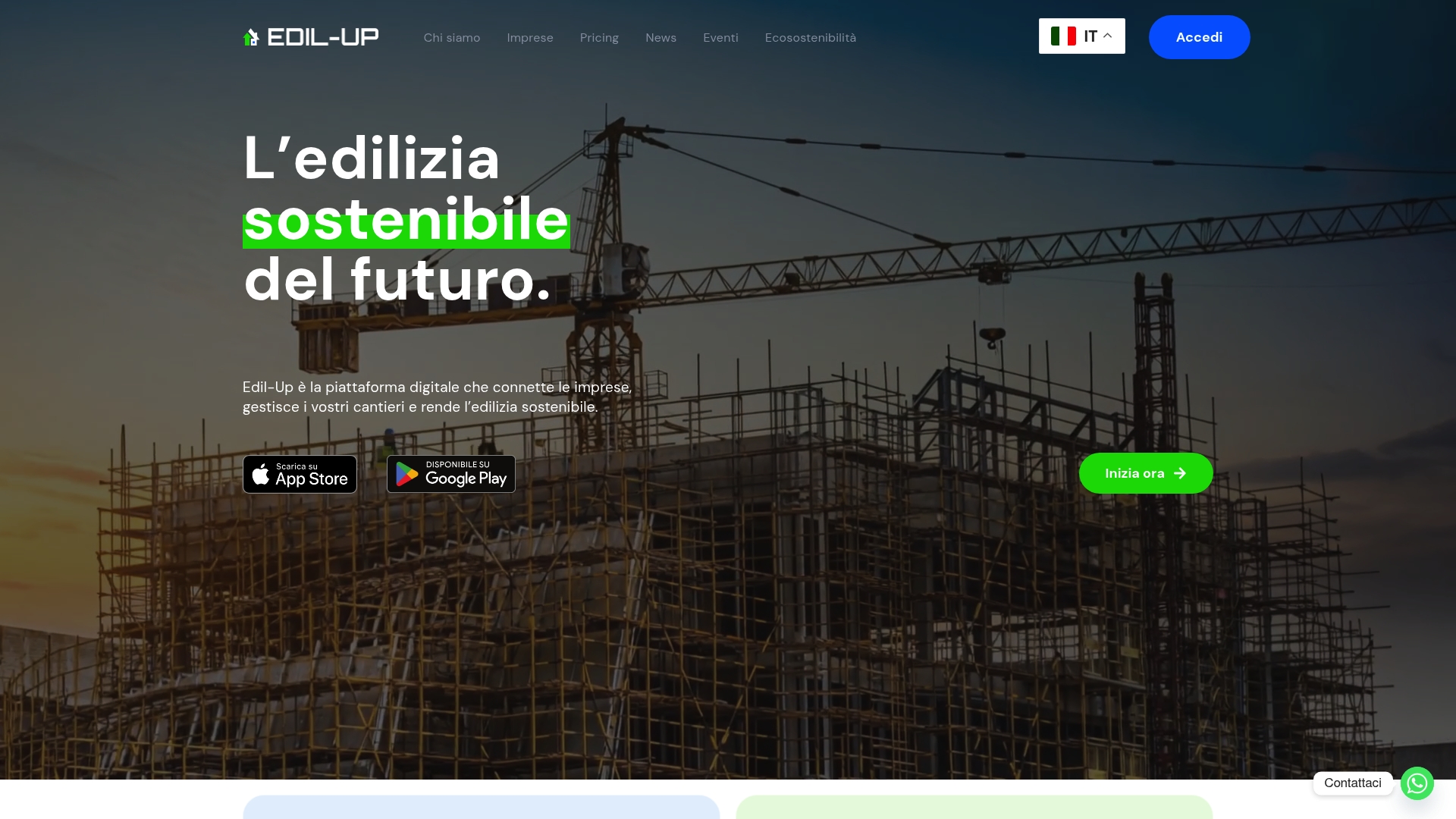
Unlike a generic drive, Edil-up is built for Italy’s construction industry: preconfigured templates, configurable approval workflows and integration between documentation and project monitoring. Every active subscription also contributes to calculating the site’s environmental savings, with one tree planted for each account.
To get started, consult the available plans and features or contact the team for a guided demonstration of the platform.
Sources
- Inspectorate
- Guide to construction-site safety document control | SafeDesk
- Construction-site documents and design revisions: how to avoid errors and discrepancies | Edilnet Blog ™
- La-documentazione-da-tenere-in-cantiere- …
This article provides general information and does not replace the advice of a qualified solicitor. Consult a qualified legal professional regarding your specific circumstances before acting on the basis of this content.